Cutting Export Cost Nearly in Half by Matching Sites in Melissa
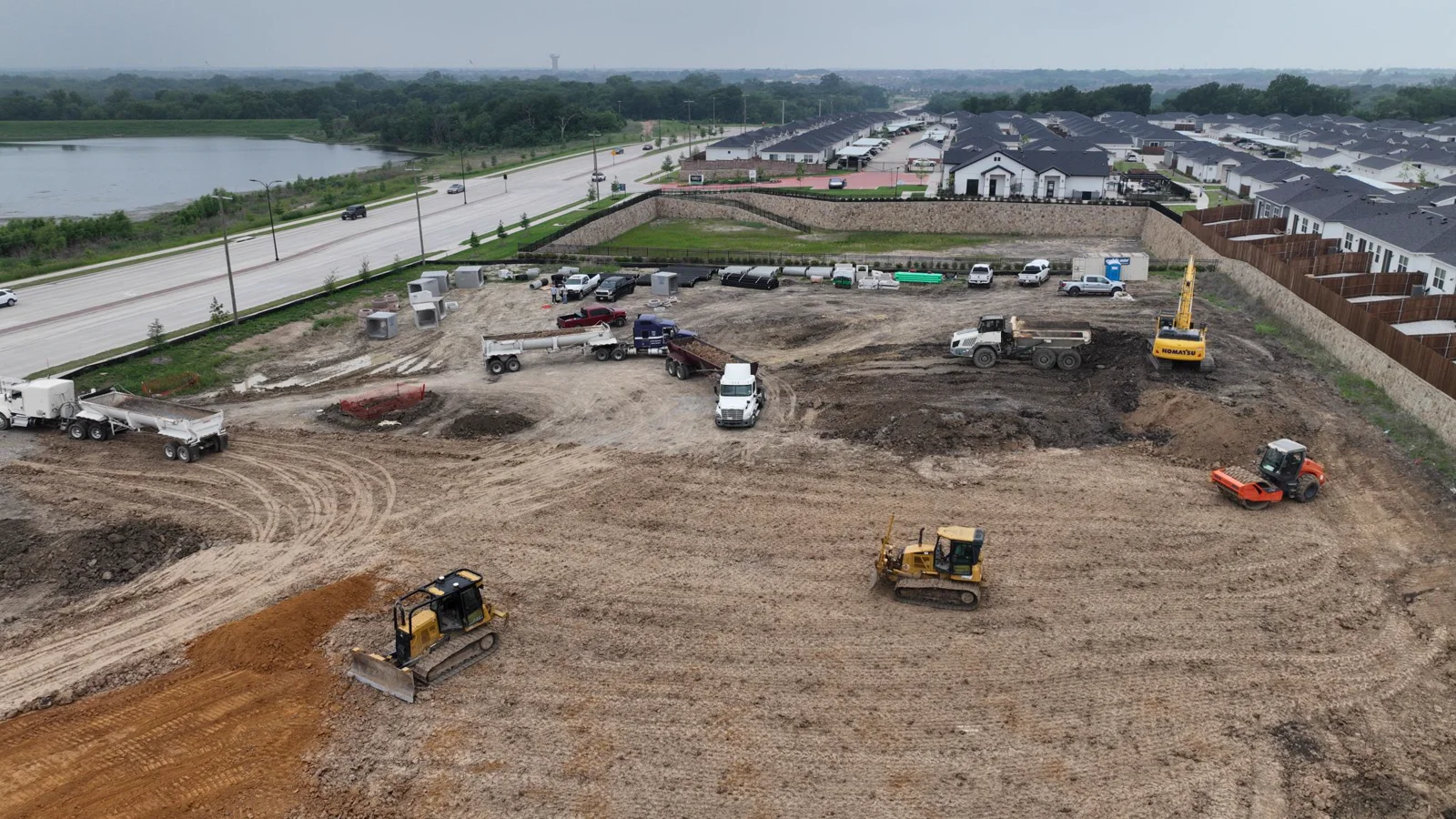
A site in Melissa needed to export common fill. The default answer is a landfill or a disposal site, and the default answer is usually the expensive one. By matching the material to a nearby project that needed it, we took nearly half the cost out of the export. This is the single cheapest change most sites can make to their dirt budget, and it depends almost entirely on when you ask.
Key takeaways
- The job: exporting common fill from a site in Melissa, Texas.
- The change: the surplus went to a nearby project that needed material, instead of to a landfill.
- The result: export cost cut nearly in half on this job.
- Two costs disappear at once, the disposal fee and the extra haul distance to reach the disposal site.
- A match has to be found while the material is still in the ground. Once trucks are booked, the option is gone.
What a landfill haul actually charges you for
Sending surplus soil to a disposal site bills you twice. There is a tipping or disposal fee at the gate, and there is the haul to get there, which is usually further than the nearest active job because disposal sites are not where construction is. Both scale with volume, and the haul side scales with distance in a way that gets punishing fast.
Clean surplus soil is also, in most cases, perfectly good material. Paying to dispose of usable fill while another site a few miles away is paying to buy fill is the most common avoidable cost in dirt logistics.
What matching does to the number
When the surplus goes to a nearby site that wants it, the disposal fee comes off entirely and the haul gets shorter. On this Melissa job that took nearly half the export cost out. The receiving site benefits at the same time, because material arriving from a few miles away costs less delivered than material bought and trucked from a commercial source.
This is the same mechanism as a paired export and haul off, viewed from the export side. Our cut and fill guide covers why so many sites end up with surplus in the first place.
What makes surplus reusable
Not all surplus can be matched. Material has to be reasonably clean, free of debris and organics, and workable at its current moisture. Wet clay that will not compact until it dries, topsoil stripped from the surface, and spoil mixed with trash or construction waste all either need treatment or genuinely belong at a disposal site.
Common fill from a cut is usually the easy case: general purpose material that another site can use to come up to grade. High plasticity clay is the harder one, and our guide on expansive clay in Texas explains why it cannot simply go under a pad. Topsoil is a separate case again, valuable for finish grade and landscaping but never structural, which our guide on fill dirt versus topsoil covers.
Why timing decides whether you get the saving
A match needs a receiving site that wants that material, in that quantity, in that window. The more notice there is, the wider the search. Told a month out that a site will run several thousand yards long on common fill, there is time to line up the other side. Told the morning the trucks are booked, the only available answer is the disposal site.
That is the entire practical lesson. The saving is not a rate you negotiate, it is an option that expires. Run the takeoff early, find out whether you are long or short, and tell us while the material is still in the ground.
Dirt export savings FAQ
Sitting on surplus dirt?
Tell us the material, the volume and the site, and we will look for somewhere nearby that needs it before we price a disposal haul. We cover DFW, Austin, San Antonio and Houston.