
Fill Dirt & Soil Delivery in Dallas-Fort Worth
Soil Depot’s North Texas team sources, brokers, and delivers fill dirt, select fill, topsoil, and sand to job sites across the DFW Metroplex, and hauls off surplus dirt when your site is generating spoils. From Collin County subdivisions to I-35 corridor commercial pads, James Parker’s team handles the material logistics so your grading crew can stay on schedule.

The DFW Soil Landscape
North Texas sits on blackland prairie with some of the highest-PI expansive clay in the state. That means most commercial and residential projects need tested, spec-compliant fill brought in from off-site sources. Finding clean material that meets your geotech requirements is half the battle. Coordinating trucks across a metro that stretches 100 miles wide is the other half.
Soil Depot maintains active relationships with export sites, borrow pits, and material yards across the Metroplex. When a developer in Frisco needs 15,000 CY of select fill and another in Mansfield is exporting 20,000 CY from a grading operation, we connect the two and handle the trucking in between. That is the core of what we do in Dallas-Fort Worth: source the right material, match it to the right site, and run the dispatch.
The DFW market moves fast. Land gets entitled, grading starts within weeks, and if your fill supplier can’t keep up with daily truck caps, your schedule slips. James’s team manages supplier coordination, daily dispatch, and real-time communication with your site superintendent so material shows up when it is supposed to and the load count holds up against the plan.
What Makes DFW Different
The Metroplex’s sprawl creates unique logistics challenges. A haul route that works at 6 AM hits gridlock by 7:30. Source sites that were exporting last month are now finished and closed. New subdivisions in Celina and Princeton are 45 minutes from the nearest material yard. We track active export sites daily and optimize haul routes to keep per-load costs down and delivery cadences reliable across Dallas, Tarrant, Collin, Denton, and Rockwall counties.
Materials We Deliver in Dallas-Fort Worth
Every load is sourced to spec and delivered in commercial volumes for contractors, civil crews, and developers across DFW.
Select Fill
Clean, compactable structural fill for building pads, parking lots, and load-bearing grade. Sourced to your geotech PI and gradation spec.
Common Fill
General-purpose fill dirt for bulk volume, elevation changes, and rough grading where structural spec isn’t required.
Fill Dirt
Bulk fill dirt delivered across Dallas and Fort Worth for land leveling, backfill, and filling low or sunken areas on commercial sites.
Topsoil
Screened topsoil delivery for finish grade, landscape areas, and final cover once the structural work is done.
Sand & Base
Cushion sand, concrete sand, and aggregate base for bedding, sub-base, and utility work across the Metroplex.
Road Base & Crushed Concrete
Flex base and recycled crushed concrete for drives, lay-down yards, and stabilized access on active sites.
Produced at Our Fort Worth Pit
Most of what moves through Dallas-Fort Worth we source and broker. This list is different: these gradations come out of our own Fort Worth operation, which means the material, the loading and the trucking sit under one roof and a spec question gets answered by the people producing it.
Texas contractors order rock by the number, so order by the number. If your plans call a gradation we have not listed, tell us the spec and we will source it.
Dallas-Fort Worth Jobs on the Ground
These are Dallas-Fort Worth projects Soil Depot has run, not scenarios. Volume, speed and cost behave differently on each one, and the write-ups explain how the job was actually put together.
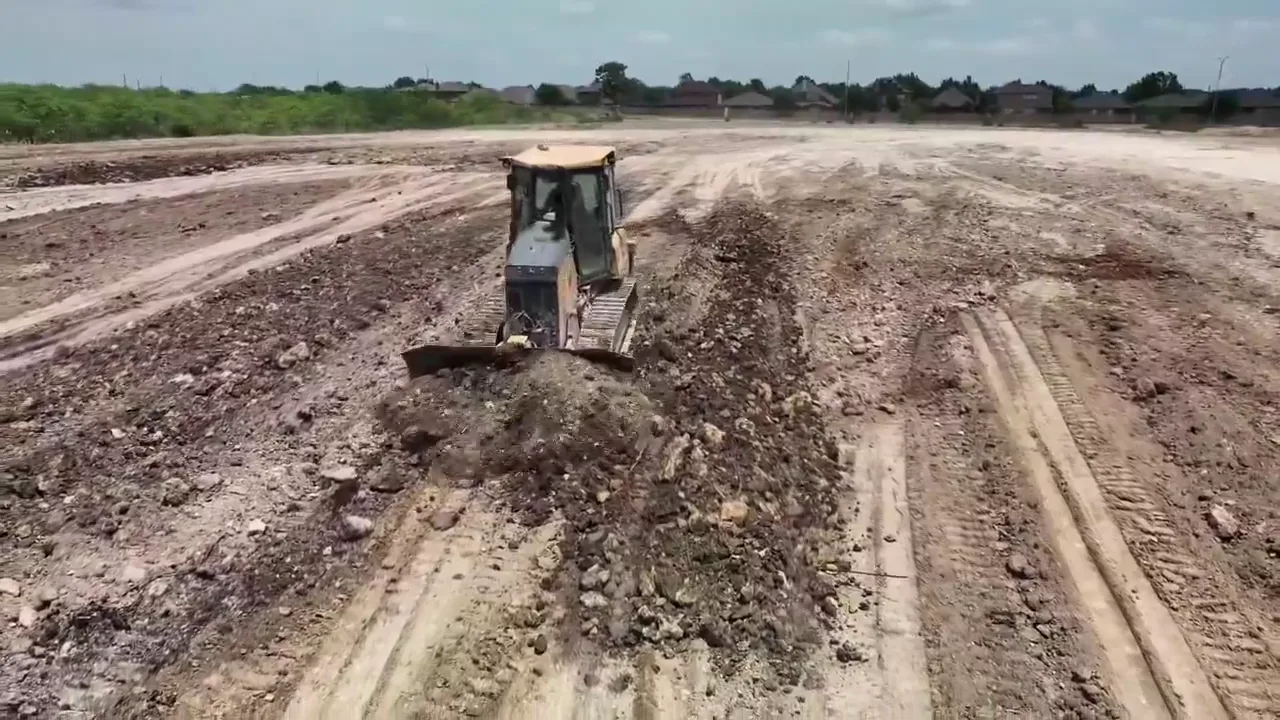
Volume Nobody Wants to Quote
Three hundred thousand yards is past the point where suppliers bid politely and start bidding to lose. Holding roughly 5,000 yards a day into one homebuilding pad is a dispatch problem long before it is a dirt problem.
Read the job →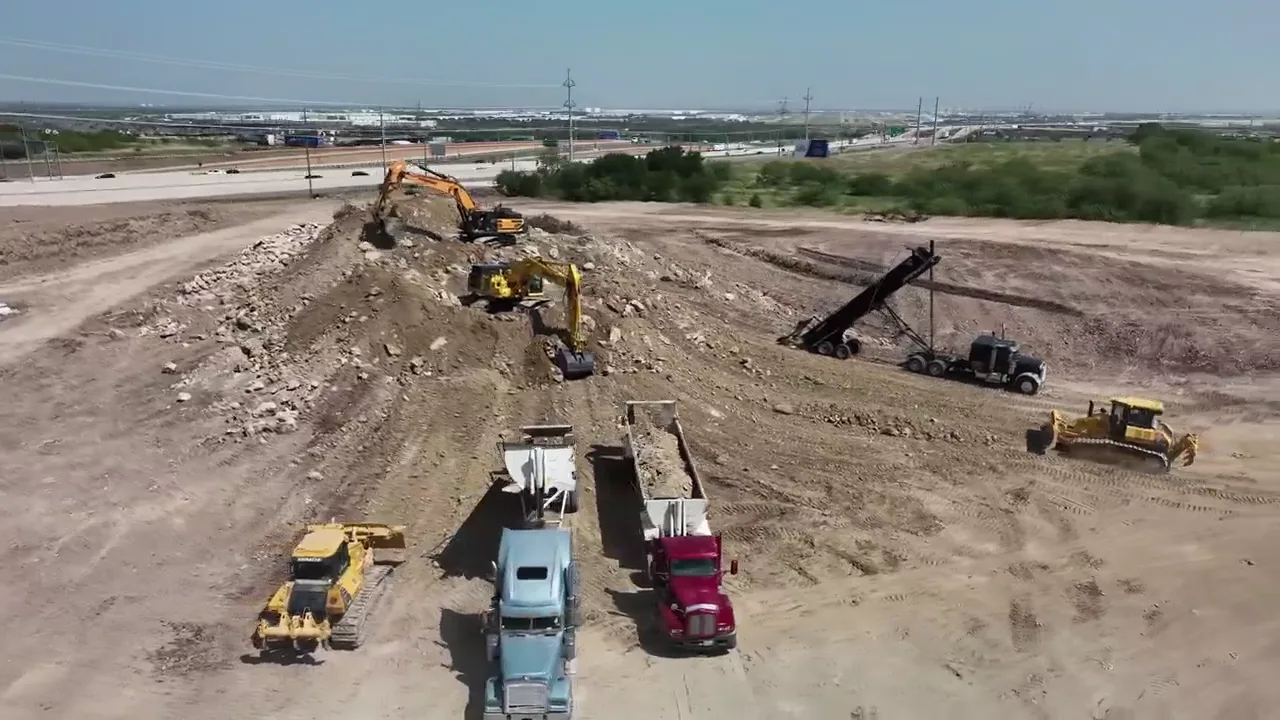
Owning the Whole Operation, Not Just the Rock
Hundreds of thousands of tons for David Weekley Homes, with 3 excavators, 2 dozers and 40 trucks under our management. Most suppliers hand you material and leave; on this one the equipment and the majority of the trucking are ours to run.
Read the job →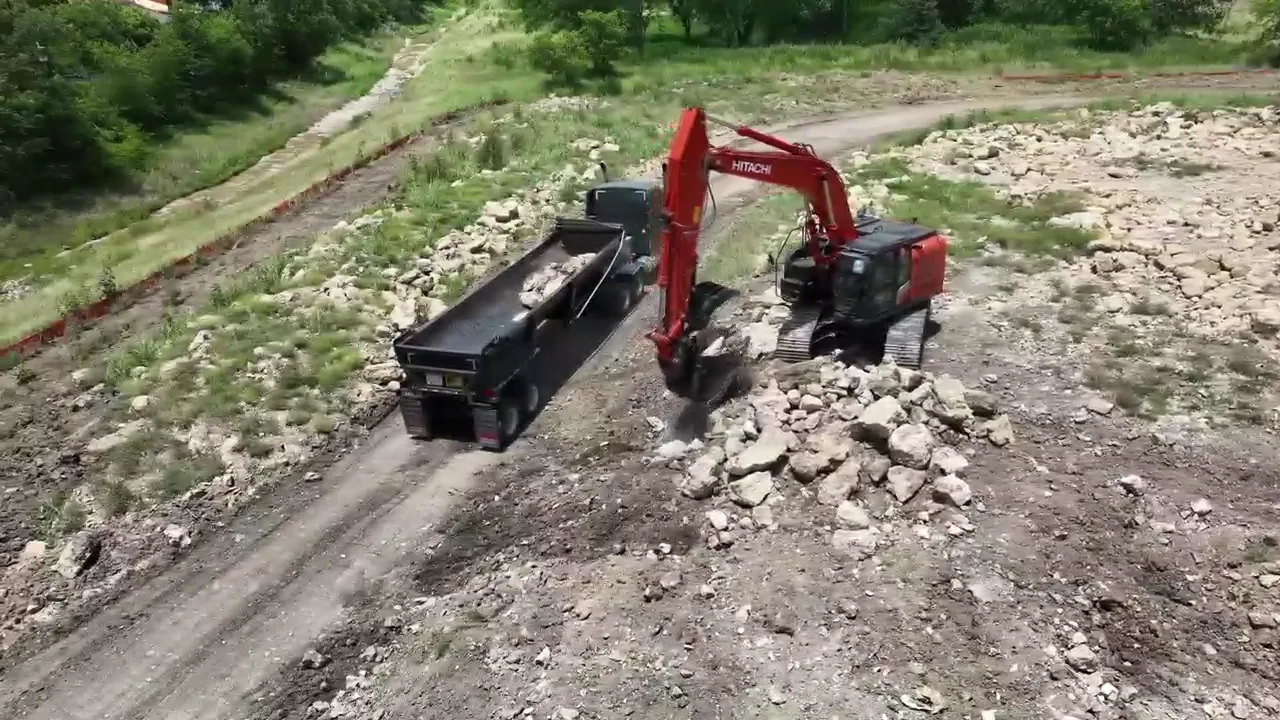
The Empty Return Trip Is the Waste
Rock leaving a West Fort Worth site for Scott and Reid, common fill coming back on the same trucks. Four competing bids priced two separate jobs. Pairing them landed near a third of that, which is the whole argument for using one company on both sides of the gate.
Read the job →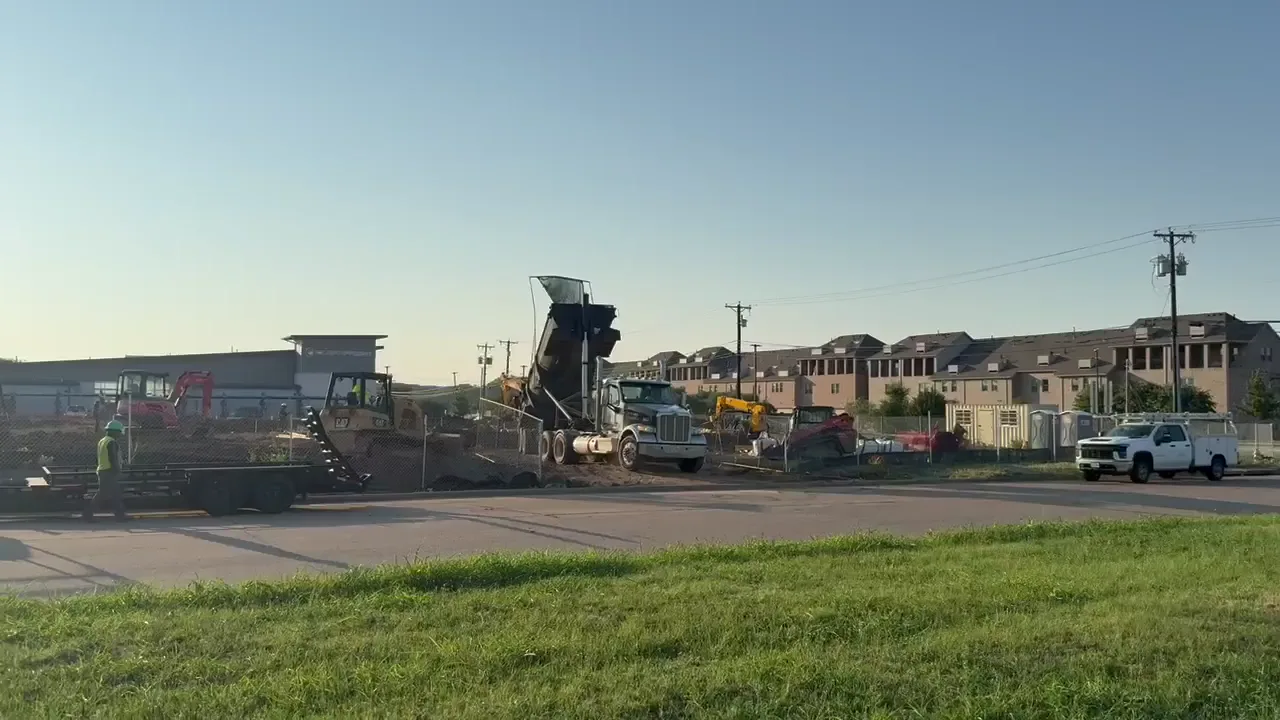
Short Notice That Did Not Cost More
Reliable Construction needed several thousand yards with no lead time, and short notice normally carries a premium. This one landed under half of open market inside 24 hours, because the material was already moving somewhere we could redirect it.
Read the job →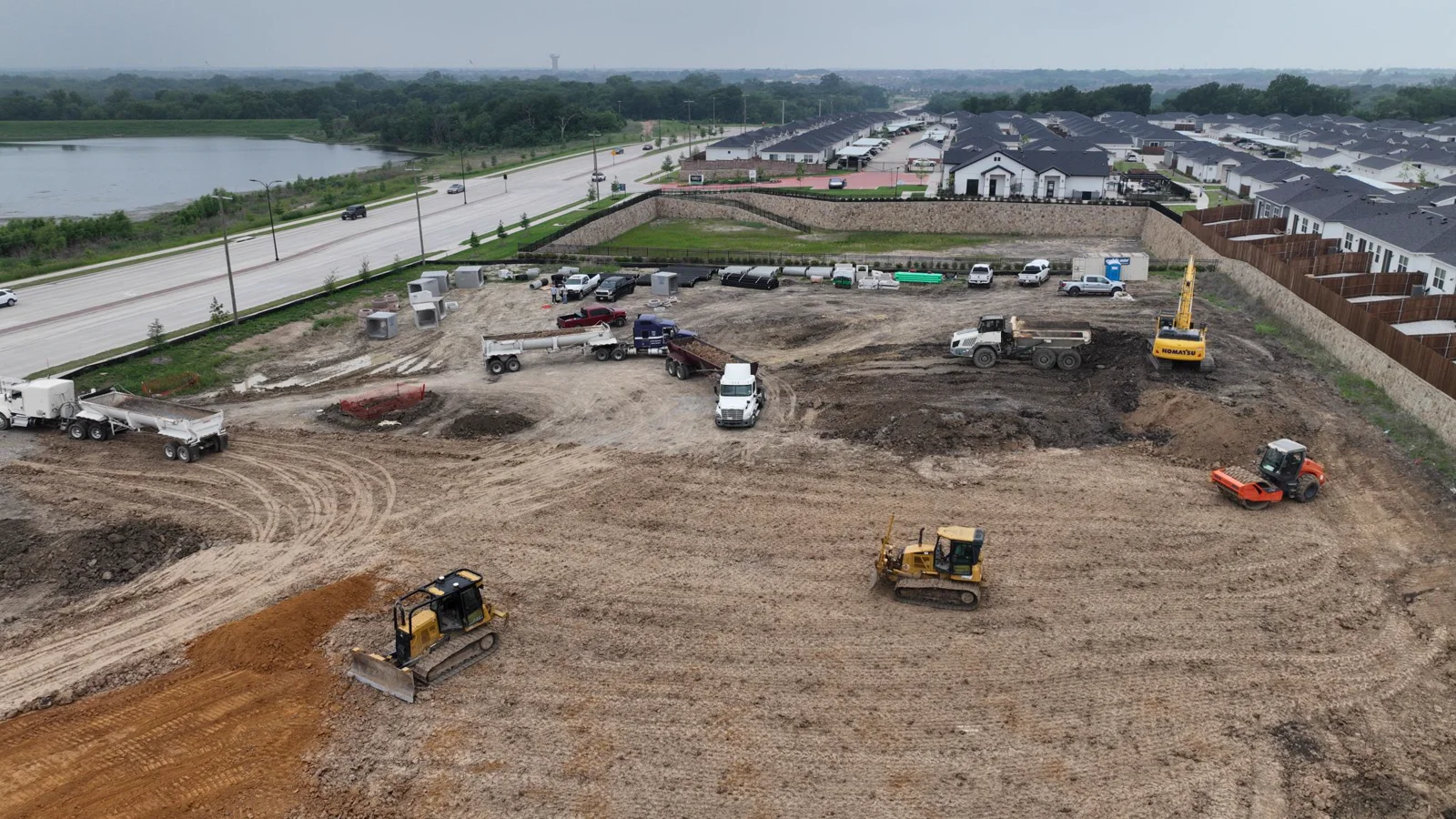
A Landfill Is Rarely the Cheapest Door
Surplus fill leaving a Melissa site went to a project that was already paying to import the same material. One phone call between two jobs took close to half the export bill off, and most sites never make it.
Read the job →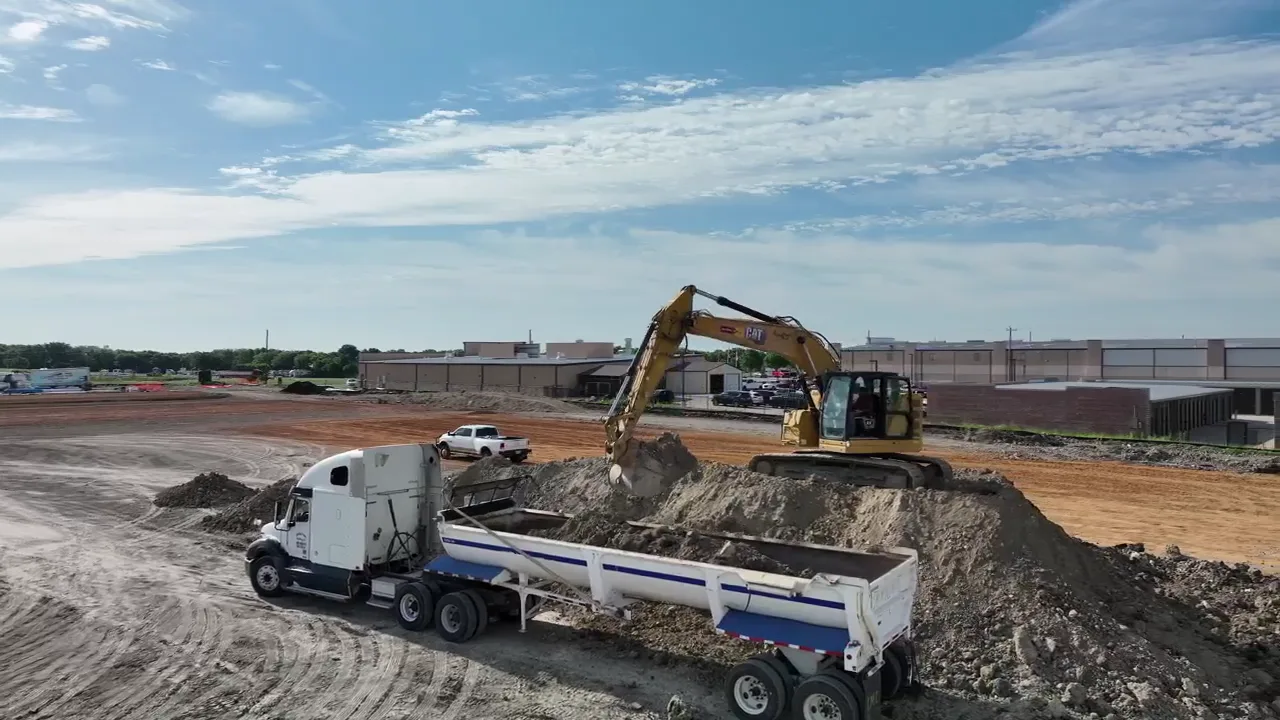
When the Spoil Is Not One Material
Dirt and rock leaving the Urban Garages development alongside XS Construction. Mixed spoil is the awkward case, because the rock and the dirt want different trucks and different destinations, and we supplied the excavator and the coordination for both.
Read the job →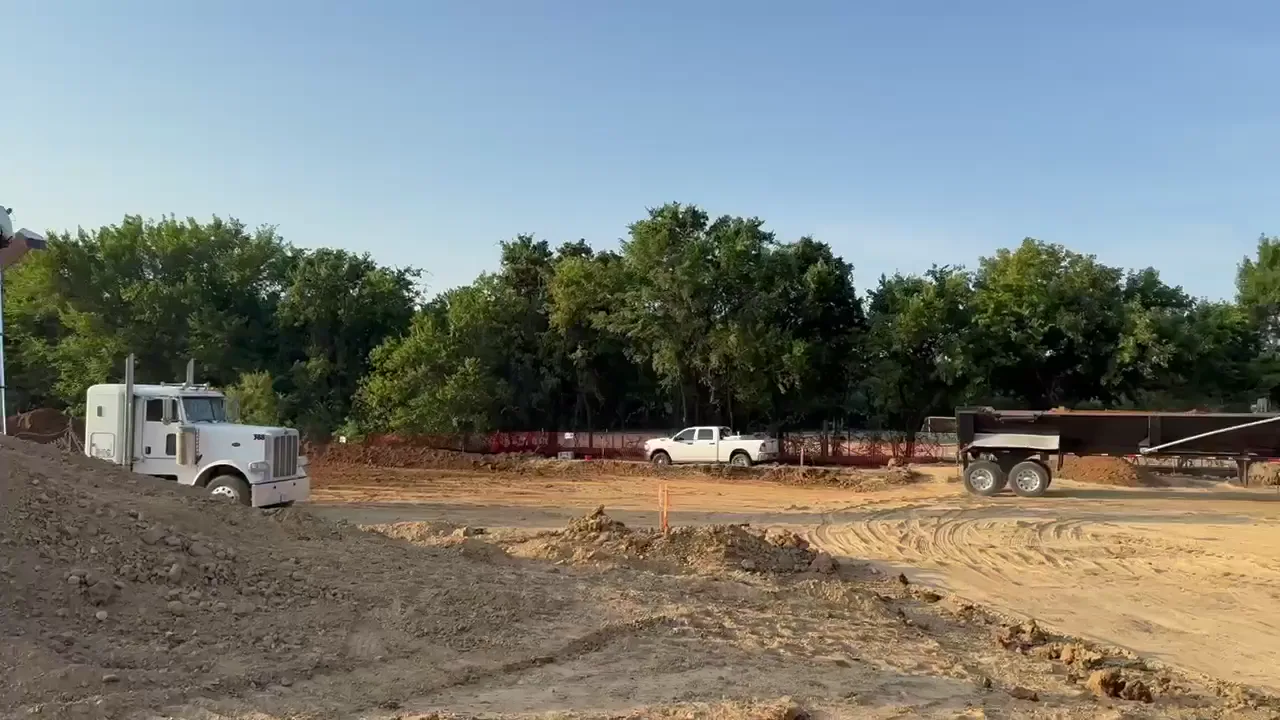
The Part That Happens Off the Property
A Southlake run where the risk was never the material. Established neighborhoods notice a tracked-out street within the hour, so the brief to the drivers mattered more than the load count.
Read the job →Dirt Export & Haul-Off in DFW
Generating more spoils than your site can balance? We export surplus dirt out of Dallas-Fort Worth job sites and route it to active fill destinations across the Metroplex. Instead of paying to dump clean material, we help you move it where it is needed, which keeps your haul costs down and your laydown areas clear.
For grading operations exporting common fill or select material, we coordinate the trucks, track the daily counts, and match your spoils to open orders in Collin, Denton, Tarrant, and Rockwall counties. One point of contact for both import and export keeps your earthwork moving in one direction: forward.
Export Dirt From Your SiteCommon DFW Applications
The projects we handle most across the Dallas-Fort Worth Metroplex:
Areas We Serve Across DFW
We deliver fill dirt and soil, and run haul-off, throughout the Dallas-Fort Worth Metroplex. The list is grouped by county because that is how a Metroplex job actually reads: the county and the city decide which specification your plans reference and whose inspector signs the embankment and base work off.
Dallas County
- Dallas
- Irving
- Garland
- Grand Prairie
- Mesquite
- Carrollton
- Richardson
- Rowlett
- Cedar Hill
- Coppell
Tarrant County
- Fort Worth
- Arlington
- Mansfield
- North Richland Hills
- Grapevine
- Southlake
- Keller
- Euless
- Bedford
- Hurst
Collin County
- Plano
- Frisco
- McKinney
- Allen
- Prosper
- Celina
- Wylie
- Melissa
- Anna
- Princeton
Denton County
- Denton
- Lewisville
- Flower Mound
- The Colony
- Little Elm
- Argyle
- Justin
- Sanger
Rockwall & Kaufman Counties
- Rockwall
- Royse City
- Heath
- Fate
- Forney
- Terrell
Ellis, Johnson & Parker Counties
- Waxahachie
- Midlothian
- Ennis
- Red Oak
- Burleson
- Cleburne
- Weatherford
Several Metroplex cities straddle a county line; the grouping follows the county that holds most of the city.
The Science of North Texas Soils
The DFW Metroplex sits on the Texas Blackland Prairie, a band of dark, calcareous clay weathered from Upper Cretaceous mudstone, chalk, and marl (the Eagle Ford, Austin Chalk, and Taylor formations). The dominant soils are smectitic Vertisols: clays built around swelling 2:1 minerals that expand when wet and shrink when dry. Houston Black, the official Texas state soil, is the signature example. This is why most North Texas commercial pads cannot be founded on native grade alone, and why imported select fill and subgrade stabilization are standard practice across the region.
| Soil series | USDA classification | Clay content | Engineering behavior |
|---|---|---|---|
| Houston Black | Fine, smectitic, thermic Udic Haplusterts (Vertisol) | 40-60% | High shrink-swell; dry cracks 0.5-4 in wide, open 90-150 days/yr |
| Heiden | Fine, smectitic, thermic Udic Haplusterts (Vertisol) | 40-60% | High shrink-swell; weathered from calcareous mudstone |
| Ferris | Fine, smectitic, thermic Udorthentic Haplusterts | 40-60% | Sloping, eroded Blackland clay; high shrink-swell |
| Austin | Fine-silty, carbonatic, thermic Udorthentic Haplustolls | silty clay / chalk | Calcareous Mollisol on Austin Chalk; lower shrink-swell than the clays |
Classifications and behavior per USDA-NRCS Official Soil Series Descriptions. Confirm parcel-specific properties with the USDA Web Soil Survey.
Why expansive clay forces imported fill
Seasonal moisture swings drive North Texas clays through repeated shrink-swell cycles that heave and crack slabs, pavements, and foundations. The USGS maps the Blackland Prairie among the most expansive-clay-prone regions in the country. The 2021 International Building Code classifies a soil as expansive at a Plasticity Index of 15 or greater, and the standard remedies are the two we coordinate every day: cap the subgrade with imported low-plasticity select fill, and chemically stabilize the native clay (lime treatment is recommended for clays around a PI of 15 and above). North Texas added nearly 178,000 residents between 2023 and 2024, the third-largest numeric gain of any U.S. metro (U.S. Census Bureau), which keeps spec-compliant fill demand climbing across Collin, Denton, Dallas, Tarrant, and Rockwall counties.
How We Spec & Source Material
Commercial fill is only useful if it meets the spec. We source select fill, flexible base, and structural material to the standards your engineer and the jobsite require, and deliver it with the documentation your testing lab needs.
TxDOT Item 132 - Embankment
The benchmark for select/structural fill: Type A material caps Liquid Limit at 45 and Plasticity Index at 15, with field density tied to PI (98%+ of max dry density at PI ≤ 15). TxDOT 2024
TxDOT Item 247 - Flexible Base
Road base and stabilized access: Grade 1-2 caps Plasticity Index at 10 and Liquid Limit at 40, compacted to 100% of max dry density. TxDOT 2024
Compaction & Atterberg testing
Material is verified by Proctor (ASTM D698 / D1557), Atterberg limits / PI (D4318), and USCS classification (D2487).
Expansive-soil & stormwater compliance
Pads are designed around the IBC expansive-soil threshold (PI ≥ 15, 2021 IBC §1803.5.3). Sites disturbing 1+ acre need a SWPPP under the TCEQ Construction General Permit (TXR150000); we time delivery and staging to fit it.
One regional rule sits on top of the TxDOT items above, and it is the one that actually governs most Metroplex work. Municipal projects across North Central Texas are built to the NCTCOG Public Works Construction Standards, the regional specification maintained by the North Central Texas Council of Governments and now in its Amended Fifth Edition. If your job is for a city in Dallas, Tarrant, Collin or Denton County, the embankment, backfill and base requirements on your plans are far more likely to reference that book than a TxDOT item directly, and we spec and document material against it the same way.
Dallas-Fort Worth Soil Delivery FAQ
References & Authorities
The technical claims on this page are grounded in primary sources:
- NCTCOG - Public Works Construction Standards, North Central Texas (Amended Fifth Edition)
- USDA-NRCS - Houston Black series (Texas state soil)
- USDA-NRCS - Heiden series
- USDA Web Soil Survey (parcel-level properties)
- USGS - Swelling Clays Map of the Conterminous U.S.
- TxDOT - Item 132 Embankment (2024)
- TxDOT - Item 247 Flexible Base (2024)
- ICC - 2021 IBC, expansive soils (§1803.5.3)
- TCEQ - Construction General Permit (TXR150000)
- U.S. Census Bureau - Metro Area Population Trends
Need dirt in DFW?
Tell us the material type, volume, and job site location. James will have a quote back to you the same day.
Serving Dallas, Fort Worth, Arlington, Plano, Frisco, McKinney, Denton and the surrounding Metroplex.
Dallas-Fort Worth Soil Conditions and What They Mean for Fill
Most of the Metroplex sits on the Blackland Prairie, and the native soils are high plasticity clays: the Houston Black and Heiden series are classic Texas Vertisols, with a plasticity index that routinely runs far above the PI of 15 that a structural select fill spec calls for. West and northwest of the clay belt the section changes to Austin Chalk and Eagle Ford shale, and shallow soils over rock like the Tarrant and Eckrant series show up around Fort Worth and the western counties.
The practical consequence on a Metroplex pad job is that the dirt already on your site usually cannot become your structural fill. Blackland clay shrinks and swells with moisture, which is why the IBC flags high plasticity soils for special design and why geotechnical reports in Dallas, Collin and Tarrant counties so often call for imported select fill under the building pad with the native clay relegated to general grade raise. That splits a single project into two material flows at once: spec select fill coming in, and surplus clay going out.
We work both sides of that split. We deliver TxDOT Item 132 grade select fill to the pad and haul the excavated clay off to an import site that wants it for grade raise, rather than to a landfill.
Fill Dirt & Select Fill for Sale in Dallas-Fort Worth
Most Metroplex pad jobs cannot reuse the dirt they dig: Blackland clay runs far past the PI 15 line a structural spec allows, so the select fill under the slab is almost always imported. That import is our core DFW trade. We sell and deliver TxDOT Item 132 grade select fill for building pads, plus bulk fill dirt and common fill for grade raises, by the truckload across Dallas, Tarrant, Collin and Denton counties, quoted same-day from the type, yards and site address. Our home yard sits in Plano, in the middle of the corridor that is pouring the most new pads.
Fill dirt in Dallas-Fort Worth, select fill, and common fill, all delivered by the truckload.
Fill Dirt Delivery Near Me in Dallas-Fort Worth
Searching for fill dirt near you in Dallas-Fort Worth? We do not sell from a yard you have to drive to. We deliver to the job site, so the material comes to your address anywhere across Dallas, Fort Worth, Arlington, Plano, Frisco, McKinney, Denton and the surrounding Metroplex, and the load is routed from whichever source sits nearest your site that week.
That also means the closest supplier on a map is not automatically the cheapest delivered price, because haul distance is only one input and material grade is the other. Send the address with the type and yards and we quote the real delivered number for your location the same day.
Dirt Hauling & Haul-Off in Dallas-Fort Worth
A DFW cut-and-fill job is really two material flows: spec fill coming in and surplus clay going out. We run both in one dispatch, delivering select fill to the pad and hauling the excavated Blackland clay off the same site, which keeps trucks loaded in both directions and your laydown area clear. We dispatch dirt hauling across the whole Metroplex, from Fort Worth's rock-shelf west side to the clay belt east of Dallas.
Need dirt removal? Start a same-day haul-off quote for Dallas-Fort Worth. Not sure which truck fits your load? See our dump truck sizes and load capacities.
Dirt Export in Dallas-Fort Worth
The clay that fails a DFW pad spec is still wanted material: grade-raise and berm work across North Texas takes high-PI clay happily. Exporting from a Metroplex site, we manage the trucks, the schedule and the destination, matching your spoil to an active import site instead of a landfill, which is usually the cheaper way off the site. Tell us the yards and the material and we quote the export same-day.
Moving dirt out is half of what we do. See dirt export and haul-off for how the match works.
Dirt Dumpsite in Dallas-Fort Worth: Where to Dump Dirt & Clean Fill Wanted
Clean fill is wanted across the Metroplex more or less continuously: the fast-growing corridor through Plano, Frisco, McKinney and Celina raises grade on new ground every month. If your DFW site is exporting, we place your clean fill with an import site that wants it and coordinate the dump trucks, which often turns a disposal line item into a low-cost or no-cost haul-off.
Bulk Topsoil, Sand & Flex Base Delivery in Dallas-Fort Worth
Under DFW drives, lots and laydown yards the base call is usually TxDOT Item 247 flex base, and we deliver it by the truckload alongside recycled crushed concrete, cushion and concrete sand, and screened topsoil for finish grade over the clay. See flex base and road base, sand and aggregate base, and bulk topsoil.
What Fill Dirt & Dirt Hauling Cost in Dallas-Fort Worth
We price material by the cubic yard and by the truckload, and haul-off per load. In the Metroplex the swing factor is haul distance: the same yards price differently in Frisco than in south Fort Worth, and clay export cost turns on which import site is taking material that week. So the honest answer to "how much" is a fast, specific quote rather than a sticker price. Send the type, yards and address and we turn it around the same day.